Introduction
From the depths of Chinese tradition comes the Dragon, one of the most revered and extraordinary figures in all of universal mythology. Unlike Western dragons, often portrayed as fearsome creatures, the Chinese Dragon manifests itself as a celestial force of harmony and wisdom. With graceful movements, it weaves the balance between heaven and earth, connecting the Five Elements - Wood, Fire, Earth, Metal and Water - in a dance that sustains life and the natural order.
More than a myth, the Dragon is a living presence at the spiritual heart of Chinese culture. For millennia, its sacred image has inspired artists, guided emperors and blessed generations with its benevolent energy. It is not just a symbol, but an ancient guardian whose influence extends beyond legends to shape history, art, spirituality and even contemporary popular culture.
On this journey of discovery, we are invited to delve into the mysteries of this magnificent being, exploring its sacred origins, divine attributes and spiritual meanings. The Chinese Dragon leads us to a wisdom that transcends time, offering valuable lessons on harmony, balance and the deep connection between the human and the divine. May this meeting be an invitation not only to meet, but to feel the presence of this celestial guardian, whose legacy continues to illuminate humanity's path.
"The dragon is benevolent, strong and harmonious - it does not seek a fight, but fears no challenge." - Writings from the Tang Dynasty
Index
Origins and History of the Chinese Dragon
The Sacred Origins of the Dragon
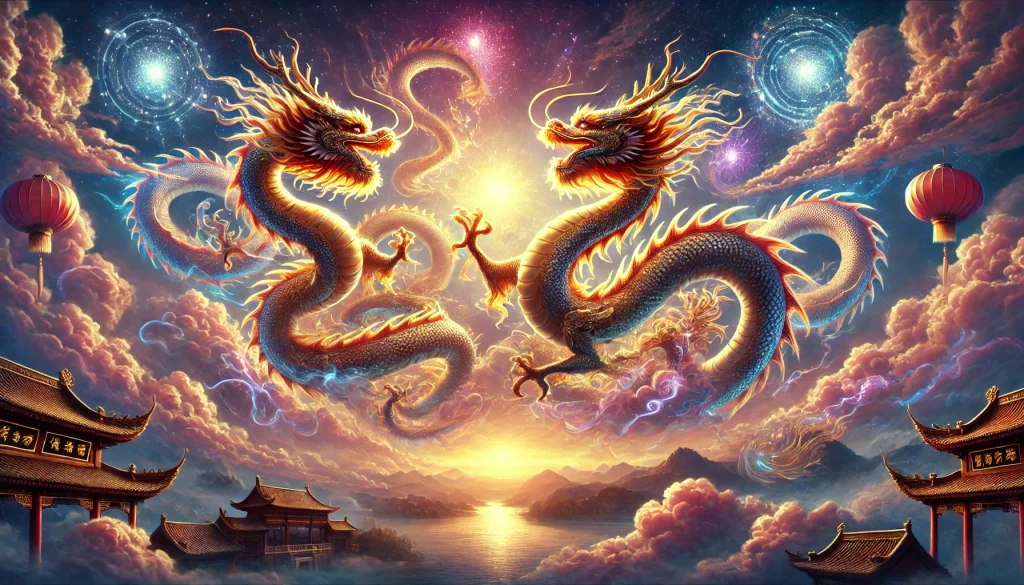
More than five millennia ago, in the depths of time, the Chinese Dragon emerged from ancestral traditions as a vital force that unites heaven and earth. Its earliest records, engraved on oracular bones and turtle shells, already showed its divine presence, deeply connected to the essential elements of existence. Intertwined with the Five Elements - Wood, Fire, Earth, Metal and Water - the Dragon manifests itself as a cosmic force that harmonizes the cycles of nature and sustains life in all its forms.
As the absolute master of water, the Dragon rules the aquatic realms: meandering rivers, vast oceans, rain-laden clouds and underground springs that nourish the earth. His power over water makes him the guardian of agriculture, guaranteeing the rains that bring abundant crops and sustain life. This intimate connection with natural cycles has elevated the Dragon to something far beyond a simple deity. He became a living symbol of the harmony between the heavenly and earthly realms, a protector who not only watches over, but nurtures and sustains the web of life.
Its impact goes beyond fields and rivers. It inspired artists, architects and emperors, who venerated it as the embodiment of celestial power and ancient wisdom. As the protector of fertility and prosperity, the Dragon played a central role in the survival and flourishing of Chinese civilization. It has thus become an eternal pillar of the Chinese people's cultural and spiritual identity, echoing its majesty throughout the ages.
The Dragon and Imperial Power
In ancient Chinese tradition, the Dragon transcends its role as a divine being and becomes the very embodiment of sacred imperial power. The emperor, known as the "Son of Heaven", was seen as the earthly incarnation of the Dragon - a living link between the heavenly realm and the human world. Just as the Dragon balances the Five Elements, the emperor had the responsibility of preserving the cosmic balance, guaranteeing order, prosperity and harmony in his domain.
This transcendental connection was expressed in every aspect of imperial life. The emperor's throne, reverently called the "Dragon Throne", symbolized more than political power; it was a sacred portal between the worlds, where the ruler mediated between heavenly and earthly forces. Dragons adorned life at the imperial court: the emperor's robes bore five-clawed dragons, an exclusive symbol of the supreme ruler; his banners fluttered with the image of the celestial being; and the palaces were meticulously decorated with representations of the Dragon, highlighting his divine presence.
More than a symbol, the figure of the Dragon at the imperial court represented the legitimacy of the heavenly mandate - a confirmation that the emperor ruled not only by human power, but by divine right. As the living manifestation of the Dragon, the emperor assumed the sacred responsibility of maintaining harmony between the heavens and the earth, the divine and the human. Just as the Dragon balances yin and yang, the emperor was seen as the personification of universal balance, ruling with wisdom, justice and benevolence for the benefit of his people and the cosmos.
Legends of the Dragon: Between Heaven and Earth
"The dragon sleeps in the deep waters until heaven calls him to dance." - Ancient Chinese saying
From the depths of time, sacred stories emerge that reveal the true nature of the Chinese Dragon as the architect of cosmic order. Among these ancient narratives, the legend of the Yellow Dragon stands out as a powerful testimony to the divine role of this heavenly creature.
The Yellow Dragon, deeply linked to the sacred Yellow River - the cradle of Chinese civilization - is described as a being of transcendental power. Its connection with the legendary Yellow Emperor, Huangdi, intertwines the destinies of heaven, earth and humanity, creating a mythical tapestry that echoes to this day.
In the ancient narratives, the Dragon not only controlled the waters of the Yellow River, but also guided the flow of creation itself. With his cosmic dance between the Five Elements, he established the patterns that sustain universal harmony. More than simple demonstrations of power, his deeds were manifestations of a profound wisdom that transcends the ages and inspires humanity. As the guardian of the balance between yin and yang, the Dragon harmonized the opposing forces of heaven and earth, preserving the sacred order that sustains all existence.
These legends are much more than stories - they are portals to understanding the universe, revealing how the Dragon acts as a mediator between heavenly and earthly forces. They invite us to reflect on our connection with the divine, ancestral wisdom and the cosmos. As we contemplate these narratives, we are reminded that the Dragon's legacy is not only a cultural heritage, but also an eternal guide to harmony and balance in our lives.
Characteristics and Symbology of the Chinese Dragon
The Sacred Form of the Dragon
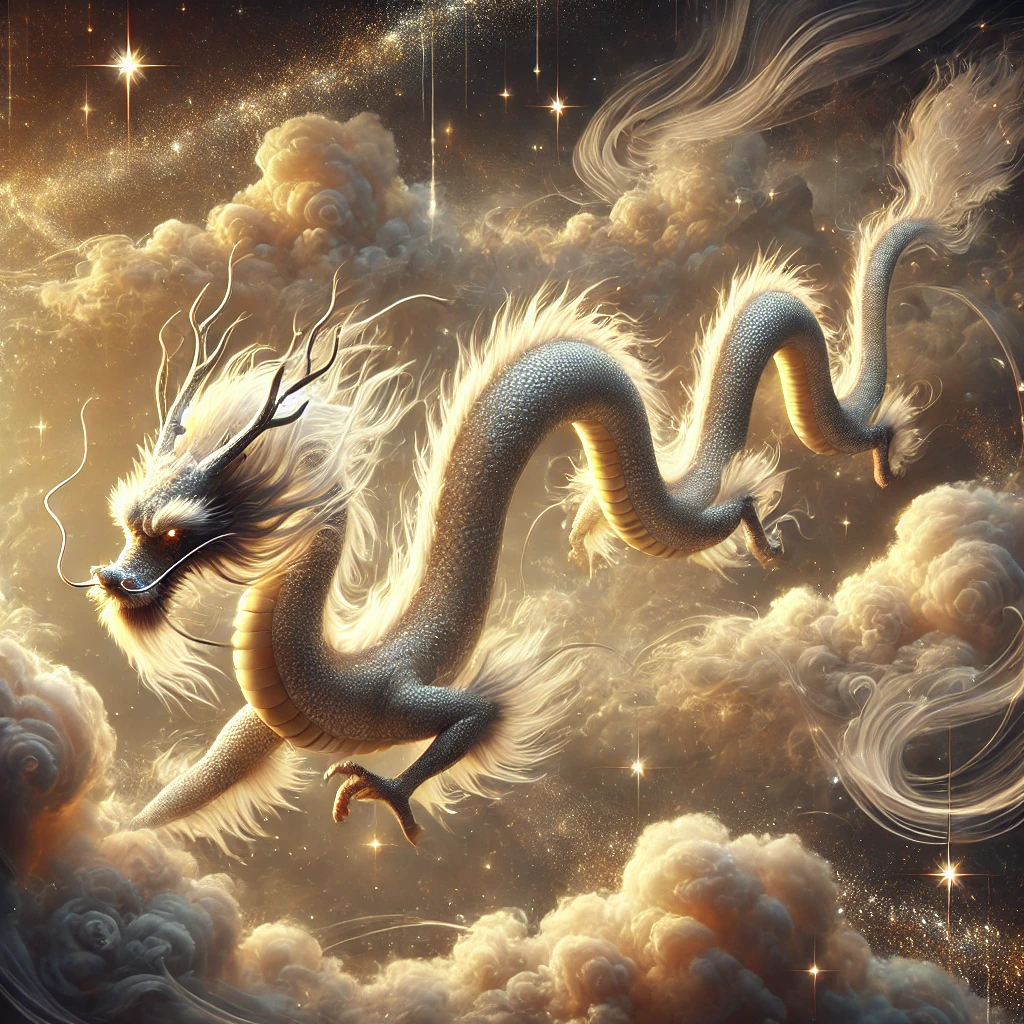
The Chinese Dragon presents itself in a unique, transcendent form that goes beyond the limitations of ordinary nature. Its majestic appearance is a symphony of sacred elements, where each feature carries profound meanings and mystical powers. This divine being is the living embodiment of the Five Elements - Wood, Fire, Terra, Metal and Water - unified in perfect harmony.
With a serpentine and fluid body, the Dragon reflects the grace of rivers and the freedom of the wind, moving deftly between the celestial and terrestrial realms. Its scales, glittering like stars, symbolize its connection to the cosmos and its ability to navigate the dimensions of existence. This sinuous form transcends aesthetics, representing his mission as guardian of the balance between yin and yang, uniting opposing forces to preserve the universal order.
The form of the Dragon is a divine fusion of the attributes of various noble animals, each imbued with meaning:
- Deer antlers symbolize spiritual wisdom and longevity.
- Eagle claws represent strength and precision, the ability to act with purpose.
- Carp whiskers reflect their connection with the sacred waters and the power of transformation.
Every detail of their anatomy is a living expression of balance and divine power, a harmonious integration of the forces of nature.
This extraordinary fusion is not merely decorative, but a profound reflection of the Dragon's wisdom. He teaches us that true majesty lies not in supremacy, but in the balanced integration of different forces and qualities. Its sacred form is an eternal reminder that harmony is not just an ideal, but a divine practice that we can apply in our own lives, in search of balance and wholeness.
The Dragon: Master of the Elements
"The Dragon is the embodiment of the Tao: in constant movement, integrating opposites in an eternal dance." - Inspired by Laozi's Tao Te Ching
At the heart of Chinese tradition, the Dragon appears as a being of transcendental power, deeply connected to the fundamental forces of nature. Among these forces, its most intimate link is with the sacred waters, where its divine presence is reflected in every drop of rain, in every wave of the ocean and in every current of the ancient rivers. However, its domain is not limited to the waters; the Dragon is the harmonizer of the Five Elements - Wood, Fire, Earth, Metal and Water - maintaining the cosmic balance that sustains all existence.
As the guardian of celestial and terrestrial waters, the Dragon moves among the clouds, commanding the rains that fertilize the earth and sustain life. His roar echoes in the thunder, his serpentine form in the rivers and his wisdom lies in the depths of the seas. This dominion over the waters is not a simple demonstration of strength, but an act of balance and protection. The Dragon ensures harmony between drought and flood, guaranteeing that the land remains fertile and that life can flourish in abundance. As a mediator between yin and yang, it harmonizes the opposing forces of nature, showing that true strength lies in fluidity, adaptation and balance.
The Dragon's power over the elements transcends the physical, being an expression of his deep understanding of natural cycles and the interdependence of all things. His role as master of the waters goes beyond protecting against natural calamities; he is a spiritual teacher, revealing the importance of balance and flexibility in all aspects of existence.
This connection with the elements makes the Dragon not just a being of power, but a guardian of life itself, sustaining the delicate balance that holds creation together. With its ancient wisdom, it teaches us that true harmony lies not in dominating nature, but in learning to flow with it, in tune with the forces that shape the universe.
The Multiple Meanings of the Sacred Dragon
The Chinese Dragon is much more than a mystical being; it is the embodiment of a complex network of sacred meanings, each reflecting different aspects of its divine nature and its influence on the world. Its virtues are deeply intertwined with the Five Elements, which it harmonizes to maintain universal equilibrium and bring prosperity to humanity.
Divine Power and Authority
As a manifestation of celestial power, the Dragon symbolizes the essence of wise and just leadership. Its power is not based on brute force, but on a natural authority that arises from its harmony with the laws of the cosmos. He teaches us that true power lies in preserving balance, serving the greater good and leading with wisdom and compassion.
Wisdom and Longevity
The guardian of ancestral knowledge, the Dragon carries with it the wisdom accumulated over the ages. His longevity is not just a reflection of his immortality, but of his deep understanding of the cycles of life and the forces of nature. He invites us to seek inner harmony and explore the deepest mysteries of existence, showing that true wisdom lies in living in tune with the rhythms of the universe.
Prosperity and Good Luck
As a divine benefactor, the Dragon is a symbol of abundance and success. It acts as a shield against negative energies and a channel for attracting good luck and fortune. Its presence reminds us that true prosperity is not just about material goods, but about alignment with the positive forces of the cosmos and the harmonious integration of yin and yang.
These meanings are not mere abstract symbols. They are living expressions of the transformative power of the Dragon, whose influence continues to bless those who honor its sacred presence. Through its wisdom, divine authority and benevolent protection, the Dragon inspires us to seek balance, prosperity and a deeper connection with the divine in our own lives.
The Chinese Dragon in Culture and Art
Celebrating the Dragon: Sacred Feasts and Rituals
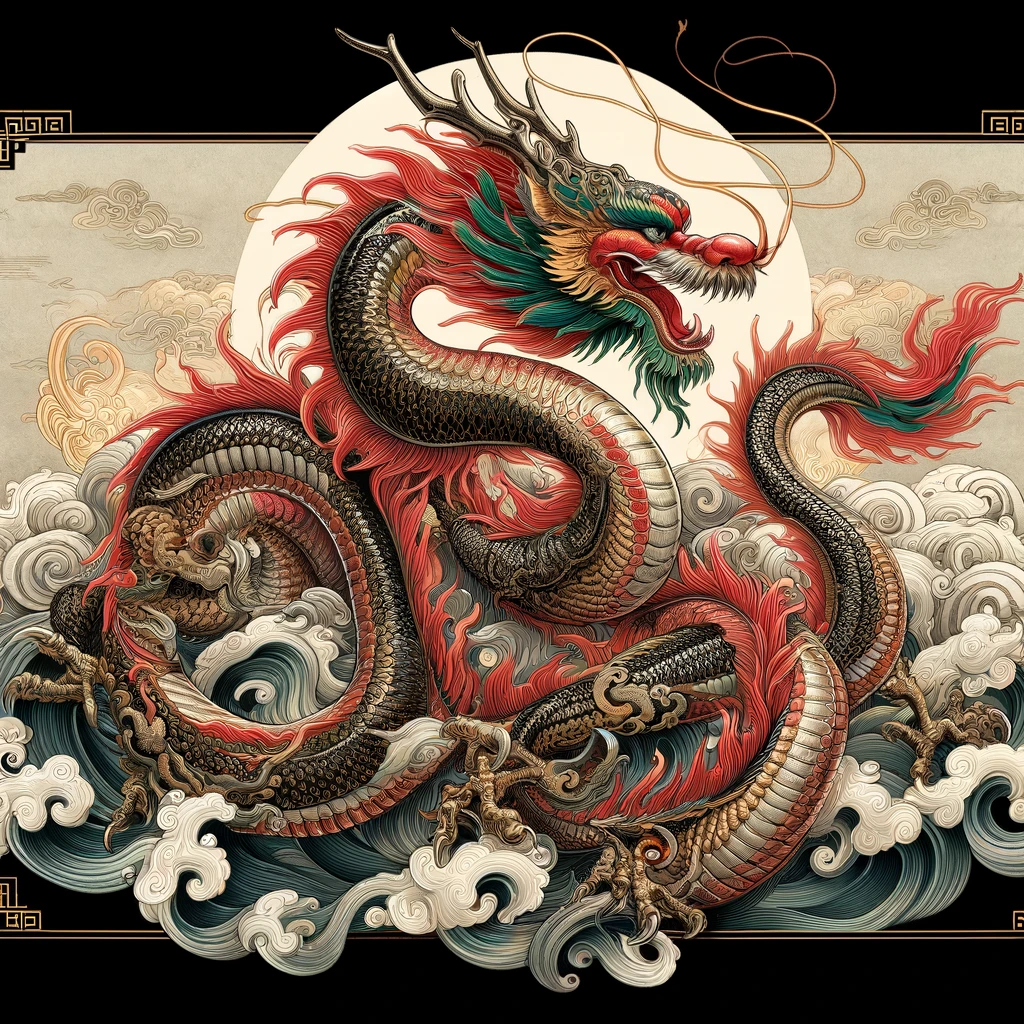
Celebrations in honor of the Chinese Dragon are extraordinary moments in which the sacred and the festive intertwine in an explosion of color, movement and vital energy. More than simple commemorations, these festivities are ancestral rituals that keep alive the connection between the people and this divine force, reaffirming the Dragon's link with the Five Elements, which it harmonizes to bring balance and prosperity to the community.
The Dragon Dance at Chinese New Year
During Chinese New Year, the streets are transformed into vibrant stages for the famous Dragon Dance. Skilled dancers bring huge dragons made of fabric and bamboo to life, performing sinuous movements that imitate the celestial dance of this sacred creature. The pulsating rhythm of the drums and the reverberating sound of the gongs create a sonic bridge between the physical and spiritual worlds. The Dragon winds its way through the streets, blessing people and spaces with its protective presence and bringing good luck and prosperity for the new cycle.
As the guardian of the balance between yin and yang, the Dragon guides these celebrations, reminding us of the importance of harmonizing opposing forces in order to achieve wholeness. Each movement of the dance symbolizes the union of energy, strength and renewal, connecting the community to a greater purpose.
The Dragon Boat Festival
Another celebration that honors the Chinese Dragon is the Dragon Boat Festival, held on the fifth day of the fifth lunar month. At this event, the waters are filled with boats meticulously decorated with dragon heads, while teams row in unison to celebrate the Dragon's power over the waters.
This festival is not just a competition or a visual spectacle; it is a tribute to the Dragon's influence as protector and guide. The festival symbolizes the balance between the natural elements - sky, earth and water - and strengthens the community's spiritual ties with the sacred.
Rituals of Renewal and Union
These celebrations transcend the visual spectacle, becoming moments of deep spiritual renewal and community unity. Through the Dragon Dance and the Dragon Boat Festival, the people reaffirm their connection with this ancestral force, renewing their hopes and strengthening the bonds that unite heaven, earth and humanity.
In every drum beat, in every synchronized paddle, the Dragon is celebrated as the guardian who protects and guides, inspiring everyone to seek harmony and prosperity in their lives. These festivals are, above all, a living reminder of the transformative power of the connection between man and the divine.
The Dragon in Sacred Art and Architecture
The Chinese Dragon manifests its divine essence through countless artistic and architectural expressions, where each representation transcends decorative character to become a portal to the sacred. From humble temples to the most imposing imperial palaces, the Dragon leaves its mark as the eternal guardian of Chinese culture and spirituality. Each of its representations celebrates its connection with the Five Elements, which it harmonizes to sustain cosmic balance and bring prosperity.
The Greatness of the Dragon in the Forbidden City
The Forbidden City in Beijing is one of the grandest examples of the Dragon's integration into sacred architecture. This iconic imperial complex is adorned with thousands of representations of the Dragon, each meticulously carved or painted.
On the golden roofs, dragons dance among the clouds, symbolizing their celestial connection. On the carved wooden panels, they meander with an eternal grace, while on the marble staircases their sinuous bodies guide visitors' steps. These representations of the Dragon go beyond ornamentation, serving as visual reminders of its role as guardian of the balance between yin and yang, preserving universal harmony.
The Dragon in Traditional Chinese Art
In traditional art, the Dragon is portrayed with a precision that goes beyond the simple aesthetic to capture its spiritual essence. Silk paintings show dragons emerging from mysterious mists, representing their connection to the unknown and the divine. Jade sculptures bring their majesty to life with fine details, while wood carvings display their eternal dance with the elements, symbolizing the harmonious interaction between the forces of nature.
Every detail - from the scales to the fierce gaze - is crafted to convey the power, wisdom and protection associated with the Dragon. These works of art are not just physical representations; they are points of spiritual connection, inviting the viewer to reflect on the protective presence and timeless influence of the Dragon in Chinese culture.
A Timeless Legacy
Through art and architecture, the Chinese Dragon continues to inspire generations, perpetuating its message of harmony and balance. Whether in a remote temple or in the great imperial halls, its representations connect us to ancient wisdom, reminding us of the beauty and power contained in the union between the divine and the human.
The Dragon in Sacred Narratives
In the golden pages of Chinese literature, the Dragon stands out as the protagonist of stories that transcend time, weaving a rich tapestry of wisdom, mystery and spirituality. Through classic works that have spanned the centuries, his majestic presence continues to inspire and enchant generations, always associated with the Five Elements, which he harmonizes to preserve cosmic balance and promote prosperity.
The Dragon in "Journey to the West"
In the classic work The Journey to the WestOne of the four great jewels of Chinese literature, the Dragon appears in various manifestations. These include the Dragon King of the Western Seas and his divine relatives, each reflecting different aspects of celestial power and wisdom.
These figures interact with iconic characters, such as the Monkey King, in narratives that explore profound themes such as harmony, transformation and the spiritual quest. The Dragon is portrayed as a cosmic mediator, harmonizing opposing forces and demonstrating his eternal connection with yin and yang. Its appearances reinforce the importance of unity and balance in life's journey.
The Dragon in "The Classic of the Seas and Mountains"
Another ancient work, The Classic of the Seas and MountainsThis ancient mythical encyclopedia not only catalogs these divine creatures, but also reveals their connection to the sacred geography of China. This ancient mythical encyclopedia not only catalogs these divine creatures, but also reveals their connection to China's sacred geography.
Dragons are presented as guardians of mountains, rivers and seas, reinforcing their role as mediators between heaven and earth. This relationship with the earth is not just symbolic, but a deep reflection of the Dragon's integration with the natural environment and the cosmic balance.
Repositories of Ancestral Wisdom
These ancestral narratives are not mere fantasy tales, but true repositories of wisdom, preserving and transmitting teachings about harmony and the connection between the divine and the human.
Through his stories, the Dragon continues to inhabit the heart of Chinese culture, inspiring those who seek to understand the depth of his teachings. Whether in heroic epics or mythical texts, the Dragon invites us to contemplate the beauty and wisdom of its legacy, showing that its influence transcends time and continues to bless generations.
Comparison with Other Mythological Dragons
The Contrast Between East and West
"In Chinese tradition, the Dragon is not a monster to be defeated, but a master to be revered." - Michael Loewe (Sinologist and author of Dragons and Trees of Heaven)
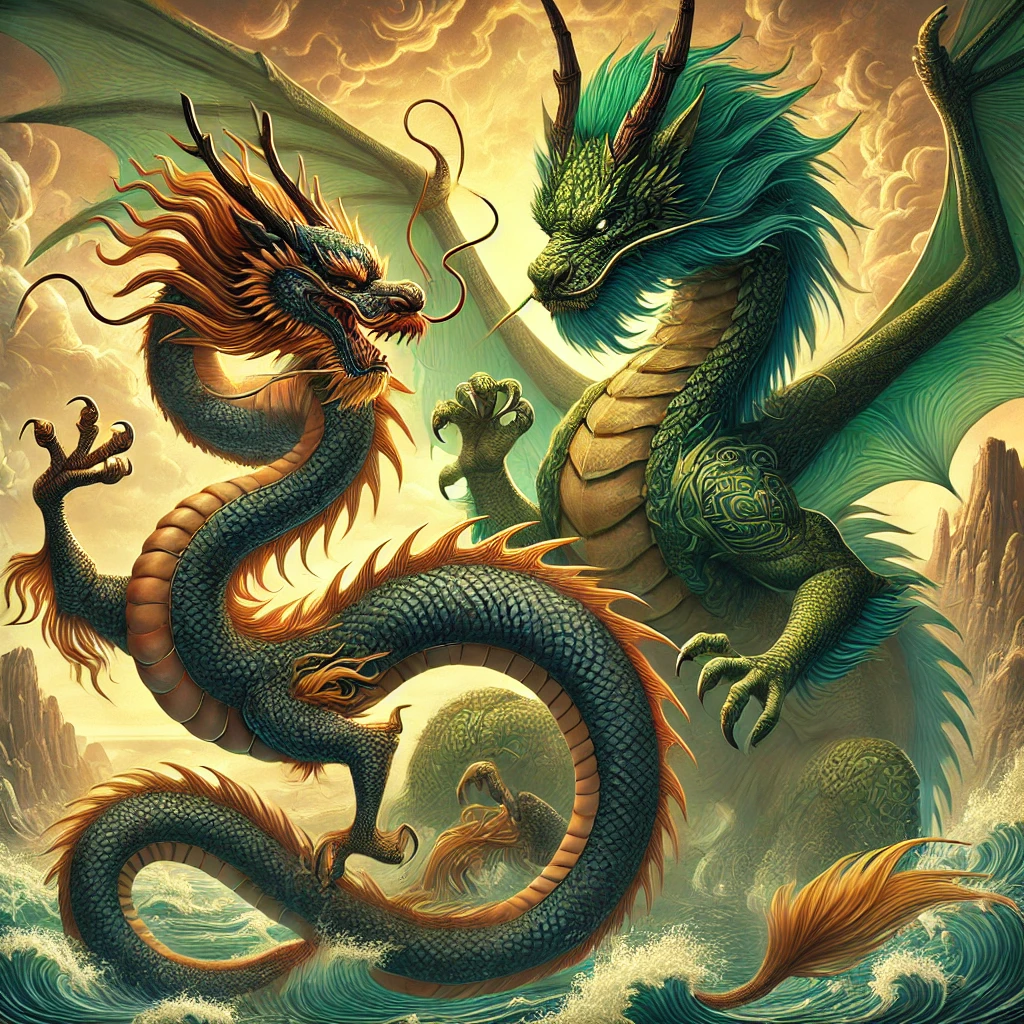
The Chinese Dragon emerges in marked contrast to its Western counterparts, highlighting how different cultures reinterpret similar archetypes in profoundly different ways. More than an aesthetic difference, this contrast reflects fundamental views on power, wisdom and the relationship between the divine and the human.
In Western imagery, dragons are often portrayed as fearsome creatures, guardians of forbidden treasures or symbols of chaos that need to be mastered. Their narratives are full of confrontation and conflict, where heroes seek glory through the destruction of these powerful beasts. The Western dragon is often an adversary, representing an obstacle to be overcome or an enemy to be vanquished.
In contrast, the Chinese Dragon personifies high ideals of harmony and balance. As the master of the Five Elements, it is not a threat but a protector, a benevolent force that balances opposing energies and guarantees prosperity. His strength does not inspire fear, but reverence; his power does not destroy, but nourishes and protects. As the guardian of the balance between yin and yang, the Chinese Dragon teaches us that true power lies not in brute force, but in the ability to maintain universal harmony.
This fundamental distinction reveals a lot about the different ways in which East and West understand the duality between strength and virtue. In the West, power is often associated with conquest and subjugation, while in Chinese tradition, the Dragon shows us that true strength lies in the harmonious integration of opposing forces and the protection of life in all its forms.
By contrasting these visions, we realize that the Chinese Dragon transcends the notion of conflict, offering a perspective of balance and connection that resonates deeply with the ideals of peace and coexistence. It reminds us that sometimes the greatest power lies in cultivating harmony, not in winning the battle.
The Chinese Dragon Among Asian Traditions
In the vast tapestry of Asian mythologies, the Chinese Dragon occupies a unique place, even though it maintains deep ties with other dragon traditions on the continent. These connections reveal how different cultures have adapted and shaped their understanding of these celestial creatures, expressing unique spiritual values and distinct cultural perspectives.
The Japanese Ryū
The Ryū, the Japanese dragon, clearly influenced by the Chinese Dragon, has developed its own characteristics that reflect Japanese spiritual sensitivity. Although it shares the divine character and the link with the waters, the Ryū has a wilder, untamed nature, symbolizing the forces of nature in a pure state. It echoes Shinto values, which celebrate the sacredness of natural elements, while maintaining a connection with spiritual order and balance.
The Nāgas of the Hindu Tradition
In Hindu mythology, the Nāgas appear as serpentine beings of great power and wisdom. Like the Chinese Dragon, they have a deep connection with water, and are often associated with fertility and the protection of rivers and lakes. However, the Nāgas have a more multifaceted nature, often described as guardians of hidden knowledge and spiritual treasures. Their duality - being revered as divine and feared as dangerous - reflects the complexity of the natural forces they represent.
The Chinese Dragon and Its Uniqueness
The Chinese Dragon is distinguished by its emphasis on the balance between heaven and earth. As the master of the Five Elements, it symbolizes universal harmony, balancing opposing forces to maintain cosmic order. Its role as guardian of yin and yang reflects the core values of Chinese culture: the search for harmony, respect for the natural order and an understanding of the interconnectedness of all things.
While the Ryū and the Nāgas carry traits specific to the cultures that created them, the Chinese Dragon stands out for its universal message of balance and prosperity. It not only rules the waters or protects treasures, but also inspires humanity to live in tune with natural and spiritual forces.
The Riches of Asian Mythologies
These different manifestations of the dragon archetype are not just variations on a common theme, but profound expressions of the unique spiritual and cultural truths of each tradition. Together, they invite us to explore the richness of Asian mythologies, which, even in their differences, share a deep reverence for the forces that shape existence.
Through these stories and symbols, the Dragon continues to inspire, teach and bless generations, reminding us that, in all its diversity, the sacred is universal.
The Chinese Dragon in Modern Culture
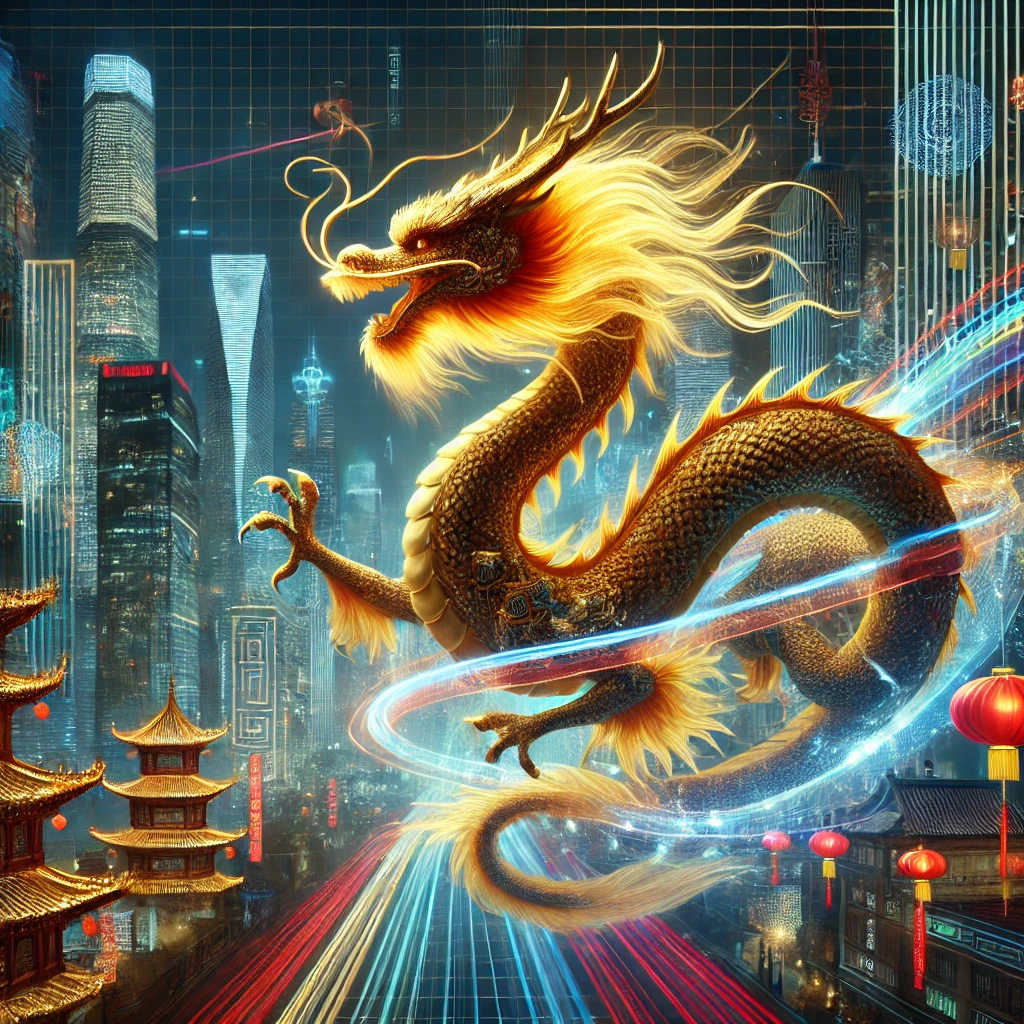
The Dragon as Guardian of National Identity
In contemporary China, the Dragon has transcended its mythological role to become a powerful symbol of cultural identity and national pride. As the eternal guardian of the Chinese spirit, it connects the ancient past to the dynamic present, inspiring the nation in its modern aspirations and achievements.
Presence at National Celebrations
The Dragon is a constant presence at official events and cultural celebrations, reaffirming its relevance as a national icon. From elaborate decorations at festivals to its image on government seals and diplomatic events, the Dragon serves as a bridge between China's rich ancient tradition and its role on the global stage. In cultural performances such as the Dragon Dance, its figure comes to life, embodying the harmony and balance that guide the Chinese people.
Continuity Symbol and Fundamental Values
More than just a national emblem, the Dragon represents the continuity of Chinese civilization throughout the ages. It embodies core values that have shaped China's identity: the search for harmony, respect for ancestral wisdom and the determination to prosper and evolve.
As master of the Five Elements and guardian of the balance between yin and yang, the Dragon teaches that true strength lies in the harmonious integration of opposing forces. In festivals and ceremonies, his image is honored as a protector not only of physical territory, but also of China's cultural essence.
Inspiration in Times of Modernization
In an era of rapid change and modernization, the presence of the Dragon reaffirms the relevance of ancestral symbols in a globalized world. It inspires the Chinese people to honor their roots while moving confidently into the future, preserving the flame of their cultural identity.
The Dragon, with its majesty and profound meaning, remains a vital link between the past and the present, reminding everyone that a nation's strength lies in its ability to balance tradition and innovation.
The Global Presence of the Chinese Dragon
In the contemporary era, the Chinese Dragon has transcended its cultural origins and established itself as a universal symbol of power, wisdom and transformation. Its influence extends beyond China's borders, finding a place in various aspects of global culture and touching lives with its ancestral energy.
The Dragon in Business and Design
In the world of business and design, the image of the Chinese Dragon is widely used to convey ideas of strength, excellence and success. International brands often incorporate its majestic figure into logos and visual identities, seeking to capture its powerful energy and timeless meaning. As the master of the Five Elements, the Dragon represents balance and harmony, essential qualities for conveying a vision of sustainable success and reliable leadership.
The Dragon in Body Art
The Chinese Dragon has also found a special place in body art, becoming one of the most popular motifs for tattoos around the world. People from different cultures choose the Dragon as a talisman of protection and power, reinterpreting its traditional meaning in personal narratives. Each tattoo is unique, combining the ancient symbolism of the Dragon with the individual aspirations and stories of those who bear it.
As the guardian of the balance between yin and yang, the Dragon carries a universal message of inner strength and resilience, which resonates deeply in times of change and challenge.
A Symbol that Transcends Cultures
The global adoption of the Chinese Dragon demonstrates how a symbol deeply rooted in a specific tradition can find universal relevance. It conveys timeless messages of strength, wisdom and transformation that transcend cultural barriers and inspire people in different contexts.
Through the Dragon, individuals around the world find inspiration to seek balance, harmony and success, while honoring the depth of their cultural roots. Its global presence keeps the flame of its ancestral wisdom alive, showing that even in an age of globalization, the power of traditional symbols continues to light the way to strength and spiritual connection.
The Dragon in Contemporary Media
In the modern landscape of entertainment, the Chinese Dragon has been given new life through various forms of media, enchanting global audiences with its majesty and mystery. Its powerful presence on the big and small screens serves as a bridge between ancient wisdom and contemporary imagination.
In films and animations, the Dragon is portrayed with a mixture of respect for tradition and visual innovation. Productions such as "Mulan", "Raya and the Last Dragon" e "The Tiger and the Dragon" present unique interpretations that maintain the sacred essence of the Dragon while making it accessible to modern audiences. As the master of the Five Elements, the Dragon personifies universal harmony, showing that true power lies in balancing opposing forces.
The world of electronic games has embraced the Chinese Dragon as a powerful element of narrative and design. In games that explore Asian mythology, it appears not only as a symbol of power, but as a bearer of ancient wisdom and spiritual transformation. As the guardian of the balance between yin and yang, the Dragon teaches us that true strength arises from the harmonious integration of opposing forces.
Through these new forms of expression, the Dragon continues its millennial journey, inspiring new generations with its eternal teachings about harmony, power and wisdom. Its presence in modern media not only preserves its cultural relevance, but also expands its reach, allowing its sacred message to reach hearts and minds all over the world.
Conclusion
The Chinese Dragon has emerged over the millennia as much more than a mythological creature - it is the embodiment of ancient wisdom and universal harmony. As the sacred guardian of Chinese culture, it encapsulates in its majestic form the spiritual and historical essence and values that have shaped one of the world's oldest and most influential civilizations. Master of the Five Elements, the Dragon teaches that true power lies in harmony, in balancing the opposing forces that sustain existence.
In the modern era, its influence has transcended China's borders, becoming a universal symbol that inspires and connects cultures. Whether in global brands, contemporary art or individual spirituality, the Chinese Dragon continues to symbolize power, wisdom and transformation. It not only guards the balance between yin and yang, but also reminds us that true strength comes from harmonious integration and respect for natural and spiritual forces.
Within the series on mythological animals, the Chinese Dragon occupies a prominent place due to its uniqueness and timeless relevance. More than a symbol of a specific culture, it is a bridge between generations and civilizations, offering lessons that transcend borders. Its representation of benevolent power and universal harmony echoes through the ages, showing how myths can shape societies and create lasting connections.
This article is a tribute to the greatness of the Chinese Dragon, whose sacred dance between heaven and earth continues to inspire and protect not only the Chinese people, but all those who open themselves to its eternal wisdom. On its journey from ancient China to the modern world, the Dragon reminds us that truly universal symbols have the power to unite, transforming humanity with their timeless messages of harmony and renewal.

I'm passionate about magic and spirituality, always looking for new knowledge about rituals, energies and the mystical universe. Here, I share magical practices and spiritual tips for those who want to connect more deeply with themselves and the world around them, all in a light and accessible way.